Plantas sagradas: el linaje secreto del chamanismo sudamericanoSacred Plants: The Secret Lineage of South American Shamanism
Ivan Montiel reseña el libro de Juan Acevedo Peinado: un recorrido por la rueda medicinal, las salamancas y los curanderos, narrado desde adentro de un linaje que sobrevivió en voz baja, sostenido durante siglos por abuelas y mamanchis.Ivan Montiel reviews Juan Acevedo Peinado's book: a journey through the medicine wheel, the salamancas and the healers, told from inside a lineage that survived in a low voice, carried for centuries by grandmothers and mamanchis.
Por Ivan Montiel · 6 de octubre de 2026By Ivan Montiel · October 6, 2026
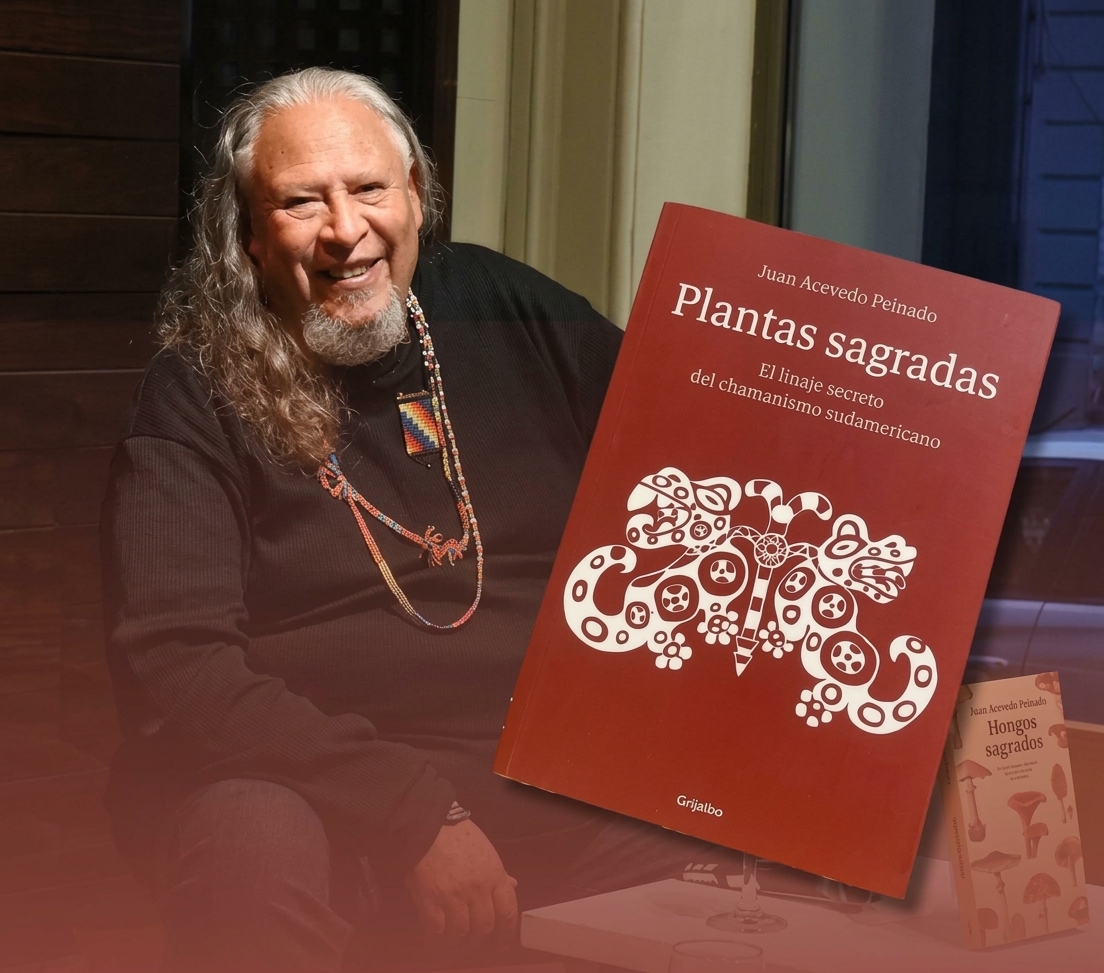
Hay libros que llegan en el momento exacto en que hacen falta. Plantas sagradas: el linaje secreto del chamanismo sudamericano, de Juan Acevedo Peinado, fue uno de esos para mí. Desde la tapa, ese rojo que evoca la sangre de la tierra, en contraste con el blanco de una imaginería que remite a la cultura Aguada, el libro ya anticipa la sabiduría profunda que guarda entre sus páginas. No es casual que lo sienta así, escribo esta reseña muy cerca de esas tierras, he realizado cursos universitarios en Arqueología Americana.
Juan Acevedo Peinado nació en Argentina y es psicólogo por la Universidad de Rosario. Pero lo que vuelve valiosa esta obra no es tanto su formación académica como su linaje: el reconocimiento del saber ancestral que abuelos y abuelas transmiten a quienes se animan a reencontrarse con él. Desde ese lugar, Juan construye un relato que entrelaza la psicología, la antropología y la arqueología americana con una vivencia personal profunda de las plantas y su imaginería.
En Plantas sagradas nos encontramos con relatos vivenciados por el autor, contados con la naturalidad de quien reconoce lo mágico en los momentos y en los seres que lo rodean. La rueda medicinal, las plantas sagradas, los encuentros en las salamancas, las brujerías y los curanderos aparecen aquí no como folclore lejano, sino como experiencias que hoy siguen vivas en comunidades de distintas partes de la Tierra Madre.
Juan registró estas vivencias con rigor metódico, entendiendo que el aquí y ahora contiene todo el tiempo recorrido por quienes nos precedieron. Son experiencias vividas a lo largo de su vida, en diferentes lugares y junto a distintos pueblos originarios, que dan cuenta de un saber tan cuidado que se transmite poco, incluso entre pares.
El libro nos lleva también por el camino hacia la puerta del otorongo, y presenta a sus guardianes, el gran otorongo, el jaguar que ilustra la tapa. Recorriendo los cuatro puntos cardinales de la rueda medicinal, viajamos junto a Juan por paisajes, personajes y situaciones verdaderamente mágicas.
Hay algo que quiero detenerme a pensar con ustedes, porque es el corazón mismo del libro, la tensión entre guardar y compartir. Juan lo llama “el linaje secreto”, y así describe con precisión el modo en que este conocimiento sobrevivió, en voz baja, de boca en boca, sostenido durante siglos sobre todo por mujeres, abuelas, mamanchis, que decidieron a quién y cuándo transmitírselo. Que el autor haya sido habilitado a contarlo no es un detalle menor. Es, en sí mismo, parte de esta historia, alguien tuvo que confiar en él para que este libro exista, y esa confianza atraviesa cada página con un cuidado que se nota en la forma de narrar, nunca exhibicionista, siempre respetuosa del misterio que no se explica ni cuestiona.
Me interesa también la estructura elegida, organizar el libro según los cuatro puntos cardinales de la rueda medicinal no es un recurso estético, es una forma de pensamiento. Cada dirección trae su propio color, su propio animal, su propia enseñanza, y Juan no fuerza sus vivencias dentro de ese esquema, las deja respirar ahí donde encajan. Esto lo distingue de otros libros del género que enumeran plantas y rituales como un catálogo. Acá el orden es ceremonial, no expositivo.
No puedo dejar de mencionar el linaje del propio Juan, descendiente de payés guaraníes mbyá, porque explica por qué el libro no suena a antropólogo observando desde afuera ni a viajero que volvió de la selva con anécdotas. Su formación en medicina, psicología y antropología, Rosario y La Plata mediante, le da herramientas para poner en palabras lo que vivió, pero lo que sostiene el relato es otra cosa, su pertenencia identitaria o étnica. Se nota la diferencia entre quien describe una ceremonia y quien fue criado, aunque sea en parte, dentro de esa cosmovisión. Ese doble lugar, de adentro y de afuera al mismo tiempo, es lo que vuelve estas más de trescientas páginas tan legibles sin perder profundidad.
Por eso también entiendo las comparaciones que se han hecho entre este libro y los de Carlos Castaneda, ambos narran un aprendizaje de primera mano junto a maestros que sostienen un saber ancestral. Pero mientras Castaneda escribe desde la mirada de quien llega de afuera a un mundo ajeno, Juan escribe desde dentro de un linaje propio, y esa diferencia hace de este libro un valor único para quien desea conocer sobre las culturas arqueológicas y étnicas en nuestro hemisferio.
Presentar esta obra es, para mí, un orgullo, presentar a un hermano del Abya Yala compartiendo El linaje secreto del chamanismo sudamericano.
Comparto con él esta inquietante pero grata necesidad de profundizar nuestra relación con las plantas y con el conocimiento ancestral.
Some books arrive at exactly the moment you need them. Plantas sagradas: el linaje secreto del chamanismo sudamericano (Sacred Plants: The Secret Lineage of South American Shamanism), by Juan Acevedo Peinado, was one of those for me. From the cover alone — that red evoking the blood of the earth, set against the white of an imagery that recalls the Aguada culture — the book already hints at the deep wisdom it holds in its pages. It is no accident that I feel it this way: I am writing this review very close to those lands, and I have taken university courses in American Archaeology.
Juan Acevedo Peinado was born in Argentina and trained as a psychologist at the University of Rosario. But what makes this work valuable is not so much his academic training as his lineage: the recognition of the ancestral knowledge that grandfathers and grandmothers pass on to those who dare to reconnect with it. From that place, Juan builds a narrative that weaves psychology, anthropology and American archaeology together with a deep personal experience of plants and their imagery.
In Plantas sagradas we find stories the author lived firsthand, told with the ease of someone who recognizes the magic in the moments and the beings around him. The medicine wheel, the sacred plants, the encounters in the salamancas, the witchcraft and the healers appear here not as distant folklore, but as experiences still alive today in communities across Mother Earth.
Juan recorded these experiences with methodical rigor, understanding that the here and now holds all the time travelled by those who came before us. They are experiences lived over the course of his life, in different places and alongside different Indigenous peoples, and they speak to a knowledge so carefully kept that it is rarely passed on, even among peers.
The book also takes us along the path to the otorongo’s door, and introduces its guardians — the great otorongo, the jaguar that illustrates the cover. Moving through the four cardinal points of the medicine wheel, we travel with Juan through landscapes, characters and situations that are truly magical.
There is something I want to pause and think through with you, because it is the very heart of the book: the tension between keeping and sharing. Juan calls it “the secret lineage,” and in doing so describes precisely the way this knowledge survived — in a low voice, by word of mouth, carried for centuries above all by women, grandmothers, mamanchis, who decided whom to pass it on to and when. That the author was given leave to tell it is no small detail. It is, in itself, part of this story: someone had to trust him for this book to exist, and that trust runs through every page with a care you can feel in the way it is told — never exhibitionist, always respectful of the mystery that is neither explained nor questioned.
I am also interested in the structure he chose. Organizing the book around the four cardinal points of the medicine wheel is not an aesthetic device; it is a way of thinking. Each direction brings its own color, its own animal, its own teaching, and Juan does not force his experiences into that scheme — he lets them breathe where they fit. That sets it apart from other books in the genre that list plants and rituals like a catalogue. Here the order is ceremonial, not expository.
I cannot leave out Juan’s own lineage as a descendant of Mbyá Guaraní payés, because it explains why the book does not sound like an anthropologist observing from the outside, or a traveller back from the jungle with anecdotes. His training in medicine, psychology and anthropology — by way of Rosario and La Plata — gives him the tools to put into words what he lived, but what sustains the narrative is something else: his identity and ethnic belonging. You can feel the difference between someone who describes a ceremony and someone raised, even if only in part, within that worldview. That double position, inside and outside at the same time, is what makes these more than three hundred pages so readable without losing depth.
That is also why I understand the comparisons that have been drawn between this book and those of Carlos Castaneda: both recount a firsthand apprenticeship alongside teachers who hold ancestral knowledge. But while Castaneda writes from the gaze of someone arriving from outside into a foreign world, Juan writes from within a lineage of his own, and that difference makes this book uniquely valuable for anyone who wants to learn about the archaeological and ethnic cultures of our hemisphere.
Presenting this work is, for me, a source of pride: presenting a brother from Abya Yala sharing The Secret Lineage of South American Shamanism.
I share with him this unsettling but welcome need to deepen our relationship with plants and with ancestral knowledge.